


What We Learned From Our Agentforce MCP Workshop With Salesforce
We had a really good conversation in our recent Agentforce + Gainsight workshop with Josh Courtright from Salesforce, Manu Mittal, and Brady Bluhm about what actually makes agents useful.
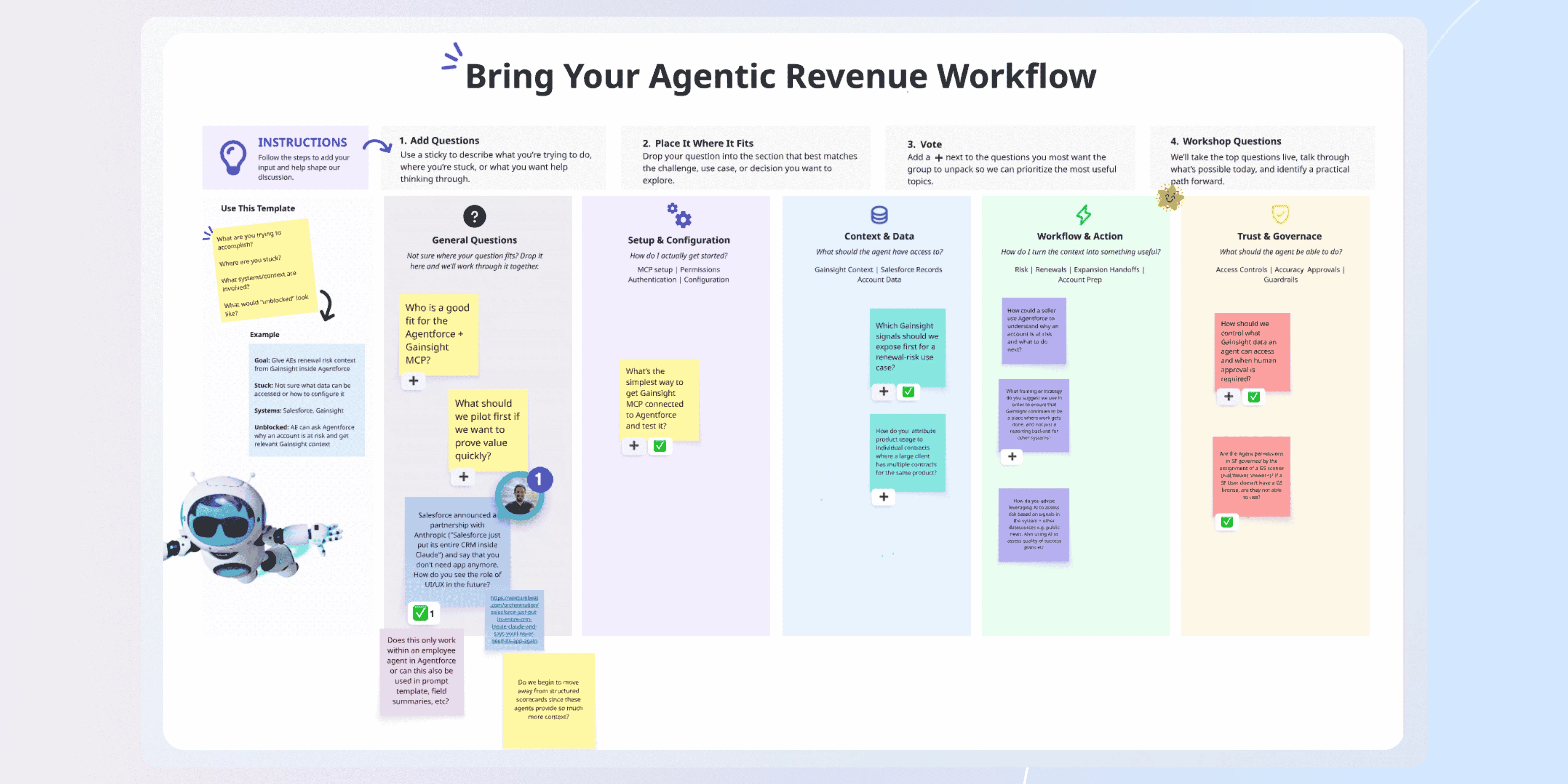
We also spent part of the session working through a live Miro board, where attendees shared the workflows they want to improve, the places they’re getting stuck, and the questions they’d want an agent to help answer.
But through it all, one thing came through pretty clearly: the agent itself is only part of the equation. The context behind it matters just as much.
A few things that stood out:
1. The quality of the answer depends on the context behind it
The session was around how MCP can bring relevant Gainsight context into Agentforce, but the goal isn’t just to give an agent more data. Instead, it’s to give it the right customer context for the question you’re asking, so someone isn’t stuck piecing the story together across different places.
In other words, more data doesn’t automatically mean a better answer. It’s all about getting the right signals in there to change the decision and agent action.
2. The interesting shift is from reactive to proactive
Brady shared a good example with health scores.
A health score can tell you what’s happening with one account. But when you look across your full book of business, that same signal can start to answer a different question: Which accounts should I be focused on right now?
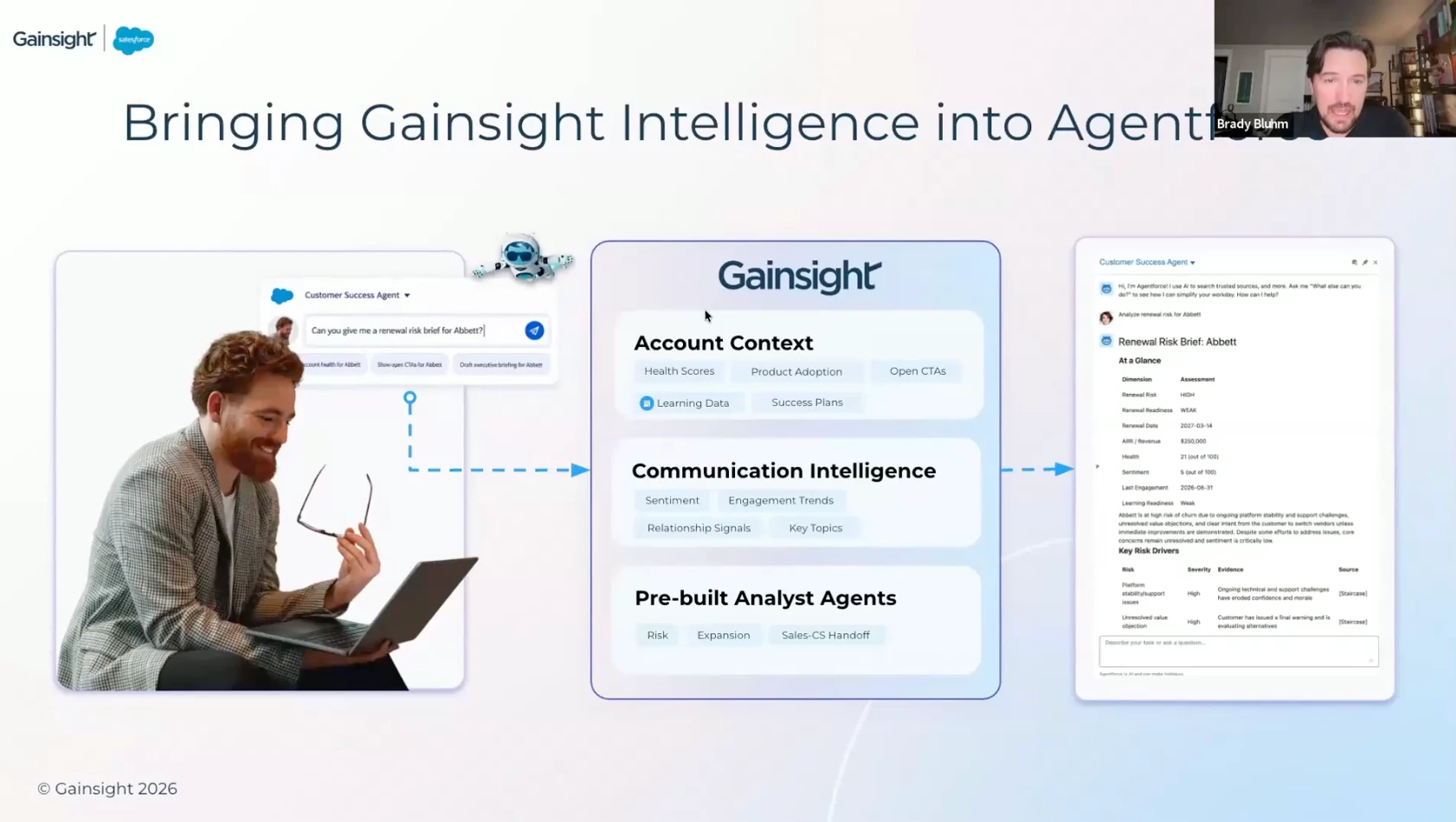
The shift that stood out to me is that it’s less about surfacing another signal and more about using the signals you already have to prioritize what to do next. That same thinking can apply beyond health scores. Any signal becomes naturally more useful when it helps answer “what should I do now?” rather than only “what happened?”
3. You don’t need to immediately jump into autonomous workflows
There’s a tendency with agents to skip ahead to, “What can this automatically do for me?”
That’ll matter, but there’s a ton of value in simply getting to better answers faster. For example, finding the right account context, summarizing what changed, surfacing a risk somebody might have missed, or giving someone a better starting point before a customer conversation.
Those are practical places to begin because they solve real problems today. They also give teams a chance to learn where they trust agents, where human judgment still matters, and where automation could eventually make sense.
If you’re thinking about where to start
Write down a few customer questions your team asks all the time.
Then ask:
- What context would someone need to answer those well?
- Where does that context live today?
- Could those signals help us decide what to do next?
If the answer is yes, you probably have the beginnings of a useful agent use case.
From there, a couple good places to keep going:
- Looking for ideas on what to ask first? Check out these prompts.
- Want to explore what’s available across Gainsight MCP? Head to our MCP Library.
A big thanks to Manu, Brady, Josh, and everyone who joined us and brought great questions to the session.
Want to see the full session? Watch the recording for the full conversation, live demo, Miro exercise, and Q&A.