September 29, 2026
Question

Passing a Role ID through SSO

  • September 29, 2026
  • 3 replies
  • 25 views

Hi everyone,

I'm currently working with our engineering team to pass custom role information through SSO using both SAML 2.0 and OAuth 2.0.

Our preferred approach is to pass logical role attributes such as isPartner, isCustomer, or isEmployee and transform that value on CC to the appropriate role ID. However, Gainsight has told us that role mapping during the sign-on process requires their specific Community Role IDs (for example, 12, 13, 14) rather than custom attributes.

My engineering team is hesitant to build custom logic that maps our identity provider roles directly to Gainsight-specific role IDs, as that approach does not scale well across other customer-facing systems we may integrate with in the future.

Has anyone encountered a similar challenge? If so, have you found an alternative approach for managing role assignments without relying on platform-specific role IDs being passed through SSO?

Thanks in advance for any insights.

3 replies

mitchell.gordon
Expert ⭐️
September 29, 2026

Hello! You would need the role as this is your attribute that maps to the user profile.


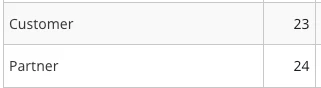
You can make the role visible or not. The role number (ID #) then matches to the Partner, Customer, Employee. Below is an example from my staging environment. You have IsPartner map to 24 and IsCustomer mapped to 23 in this scenario. 
 

 You go XXXinsided.com/settings/role/overview to do this and it can be completed in a few minutes. 


This new role can now be used to give additional access to content locations, email campaigns ect.

September 29, 2026

Hey ​@mitchell.gordon - just to clarify. I could have the role pass from the SSO provider as isPartner instead of the role ID? Gainsight told me it has to be the role ID not the role name

mitchell.gordon
Expert ⭐️
September 29, 2026

isPartner gets mapped to 24. When mapped, the user obtains the role of “Partner” based on that ID in the screenshot above.