
dayn.johnson
VIP ⭐️⭐️⭐️⭐️⭐️
May 10, 2024
Released

Dynamic JO needs additional data types if we are not allowed to do Custom Field Mapping.

Related products:CS Journey Orchestrator
  • May 10, 2024
  • 32 replies
  • 639 views

Title says it all. This issue (lack of Custom Field Mapping) was addressed in a post that’s hidden behind the private Dynamic JO beta group walls. It has not been solved, and it is (and will continue to be) a major pain point until a solution is implemented. @vmallya, is this something that’s on the roadmap to be re-released in dynamic JO, since the feature was present in advanced JO and was removed? Seems to be a pretty common use case.

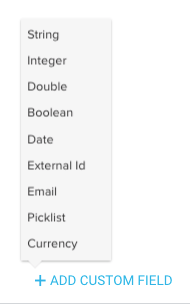
When building case fields in the dynamic JO, we’re only allowed to choose from three data types (number, boolean, string). 
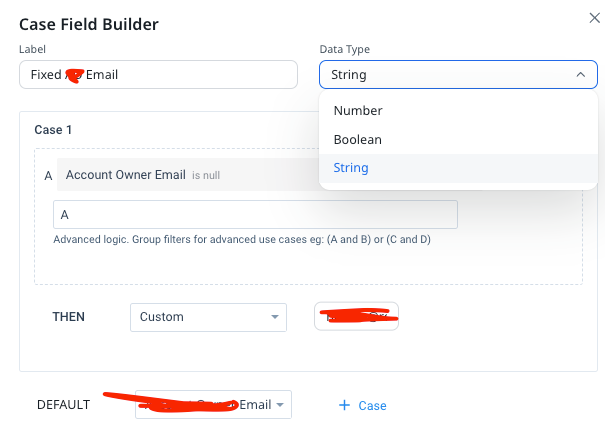


This becomes an issue when we then try to map those case fields to an email field in the template. Those fields (as strings) are only available in the name fields.
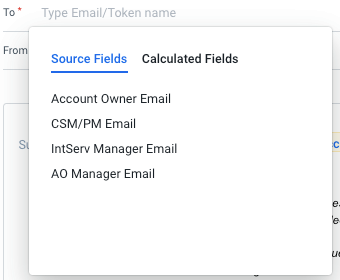
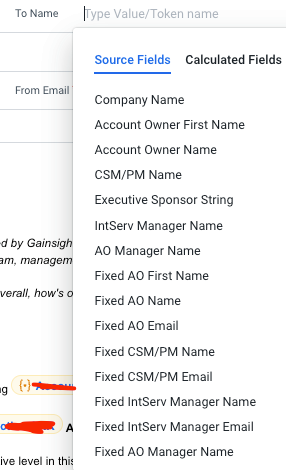


For comparison’s sake, in advanced JO, this was never an issue, since we were able to quickly map those strings to an email data type (or any other data type available in the Custom Field Mapping).
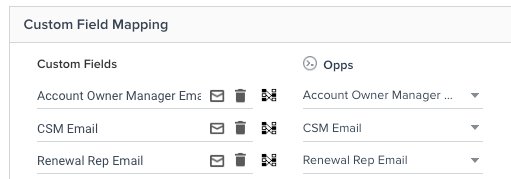


Would it be possible to add additional data types in the Dynamic JO Case Field Builder? This feels like we’re taking one step forward and two steps backward with this new release.

The workaround (I’ll report back once I’ve tried it) will be to re-source the email data and merge it with the case field to turn those case data strings back into an email data type.

* As a note, this workaround was presented in the aforementioned post that circulated in the private dynamic JO beta group (I’ll share the contents of that post in a comment below for reference), and the issue was marked as solved, but the fact that this is still such a big pain point (and that the feature was effectively hamstrung while working to improve the JO platform, even though it was addressed nine months ago) is concerning.

Bottom line: creating a case expression to fix a null email so an email doesn’t fail should be easy.

32 replies

dayn.johnson
VIP ⭐️⭐️⭐️⭐️⭐️
June 21, 2024

Thank you to @vmallya for the insight shared in the community post about the recent patch! Sharing that response here for visibility for everyone else in the community following this idea, with my response below. 😎

Explanation

The issue with Events and CSV is that we don't have a data type reference, so all fields are treated as String when synced. Therefore, providing the option to change made sense in this context. 

For other sources like Segments, Query, and DD, the data type is defined. However, the challenge is that case statements in DD and Query do not currently support the output type of Email. We are working on extending support for email in case statements from DD to address this in one of the upcoming patch releases. I hope this will resolve the issue mentioned in the linked thread.


My response:

The lack of a data type reference being an issue makes sense since custom field mapping is not currently a part of the new dynamic JO.

From my perspective, the ideal situation would be to have the ability to change the data type in the audience configuration screen for all source types. The bulk of our JO programs are built using a query source (most using a similar object and merging different data depending on the target audience).

Being able to add a case expression transformation within the JO query (not within a referenced DD) is part of why we continue to rely on the old advanced JO. It’s a quick, easy, and reliable method of ensuring that the case statement string is able to be used in the email fields.

I’ll stay tuned to the roadmap to hear more about these upcoming patch releases, and look forward to hearing more about it!

Staff CS Content & Comms Manager, 2x Gainsight CS Ops Product Council Member
john.cowles
Helper ⭐️
June 26, 2024

This is an issue for us as well.  We were used to deriving a send from email address in the old programs that can be used in emails.  The new advanced programs does not support this previous behavior and causing us challenges.  We have found a hack to do this via calculated rules, but is less than ideal.  It would be very useful if you can create parity between the old designer and the new one by supporting this need.  

jrich
Contributor ⭐️⭐️⭐️⭐️
June 26, 2024

The original post by @dayn.johnson  has the exact same use case we ran into. Our “wait is this really missing from Dynamic Programs?” moment came when we needed to override email addresses based on a case statement. 

Before we could map things like sender email, sender name, etc in the standard or custom field mapping. Sender, for example, might be different depending on the participant. This logic needs to be calculated in the query at times.

In the new dynamic programs we have no ability to map standard or custom fields (outside of recipient email). And on top of that, not having the ability to change the type of the fields leaves us doing risky workarounds. Please try to provide this core feature to dynamic programs ASAP. 

dayn.johnson
VIP ⭐️⭐️⭐️⭐️⭐️
June 26, 2024

Before we could map things like sender email, sender name, etc in the standard or custom field mapping. Sender, for example, might be different depending on the participant. This logic needs to be calculated in the query at times.

In the new dynamic programs we have no ability to map standard or custom fields (outside of recipient email). And on top of that, not having the ability to change the type of the fields leaves us doing risky workarounds. Please try to provide this core feature to dynamic programs ASAP. 

This ☝ is so closely related to this idea it’s not even funny. I can’t count the number of times we’ve needed to add a case statement to an active program (which is not possible in dynamic JOs). Please, I’d love to be able to start using dynamic JO, but until we have this #productparity with the “old” advanced JO, it’s just not practical.

Staff CS Content & Comms Manager, 2x Gainsight CS Ops Product Council Member
bradley
Expert ⭐️
June 27, 2024

How would customers with existing JO programs eventually migrate to dynamic JO programs without this?

dayn.johnson
VIP ⭐️⭐️⭐️⭐️⭐️
June 27, 2024

How would customers with existing JO programs eventually migrate to dynamic JO programs without this?

For us, at this point? We wouldn’t.

Part is due to not having these additional data types available for ad-hoc (in-query) transformations. The other is the lack of multiple queries -- the execution action schedule doesn’t help when we don’t have user-level (or company level) time zones. We’d need to start building regional variations of each program type, with a different query for each (and additional case expressions). So one program would have to be migrated as three (or more).

Staff CS Content & Comms Manager, 2x Gainsight CS Ops Product Council Member
Contributor ⭐️⭐️⭐️⭐️⭐️
August 9, 2024

THIS is one of the top reasons I’m not using new JO. This, and the inability to make changes to queries in active JOs.

dayn.johnson
VIP ⭐️⭐️⭐️⭐️⭐️
September 23, 2024

Jumping back in on this post -- @vmallya, any updates on where this might be on the roadmap?

However, the challenge is that case statements in DD and Query do not currently support the output type of Email. We are working on extending support for email in case statements from DD to address this in one of the upcoming patch releases. I hope this will resolve the issue mentioned in the linked thread.


@alizee posted an absolutely brilliant solution for creating a fallback sender if the relationship sender is null. 


For those cases that are outliers, I think I may have solved for the issue of email data types not working in dynamic JO, but it’s definitely not as easy as custom field mapping. And this is yet another reason I’ll plug @matthew_lind’s answer in the Admin Training Corner series (from awhile ago) about clearly labeling your steps: 


Question for everyone else:

Curious to hear what everyone else is doing (if you’re using dynamic JO), or if you’re staying with advanced JO until we’re able to actually map custom fields for DDs and query sources.

My solution:

I created a Case Expression Data Design (DD) template that could be pulled into other DDs or queries.

My solution is below, but I’m curious to hear what everyone else is doing.

Pulls account team info (company object) to use in the case expressions (transform 1), then fixes the string email issues (maps string data back to the “master field”) in the union. Transform 2 just re-names a couple fields (optional).
Case expressions used in this DD

The union is key. See the hover text in the “information” tooltip for the Master Field column. 

Unified Fields will inherit the properties of Master Fields such as data type, decimal points…

👆 this means that mapping the Case Expression output (string data type) from Transform 1 to the original email field from the Company Object will force the Case Expression output to acquire the email data type. This allows that Case Expression email address output to be mapped in an email field in the dynamic JO.

Union: forces the string data to inherit the properties of the email data fields from the company object

The output from this case expression can then be merged into a previously created DD or query as needed (like so).

DD merging case expression output with additional recipient fields


Staff CS Content & Comms Manager, 2x Gainsight CS Ops Product Council Member
dayn.johnson
VIP ⭐️⭐️⭐️⭐️⭐️
December 20, 2024

Hi ​@vmallya, checking back in to see if there might be any update on whether dynamic JO’s roadmap over the next few months includes custom field mapping. Between the limit of 10 calculated fields, the inability to edit a query in an active dynamic program, and the difficulty required to set up case expressions in data designs when we’re transforming a custom email string back to an email data type, there are a lot of obstacles to our adoption of dynamic JO for any external-facing programs.

Happy Holidays!

Staff CS Content & Comms Manager, 2x Gainsight CS Ops Product Council Member
rrobinson
Contributor ⭐️⭐️⭐️⭐️⭐️
December 20, 2024

How would customers with existing JO programs eventually migrate to dynamic JO programs without this?

This is a big question that would put a few minds at ease if we knew what was coming.

There has been fairly consistent feedback over many months - especially around field mapping, any update here @vmallya ?

-RR